

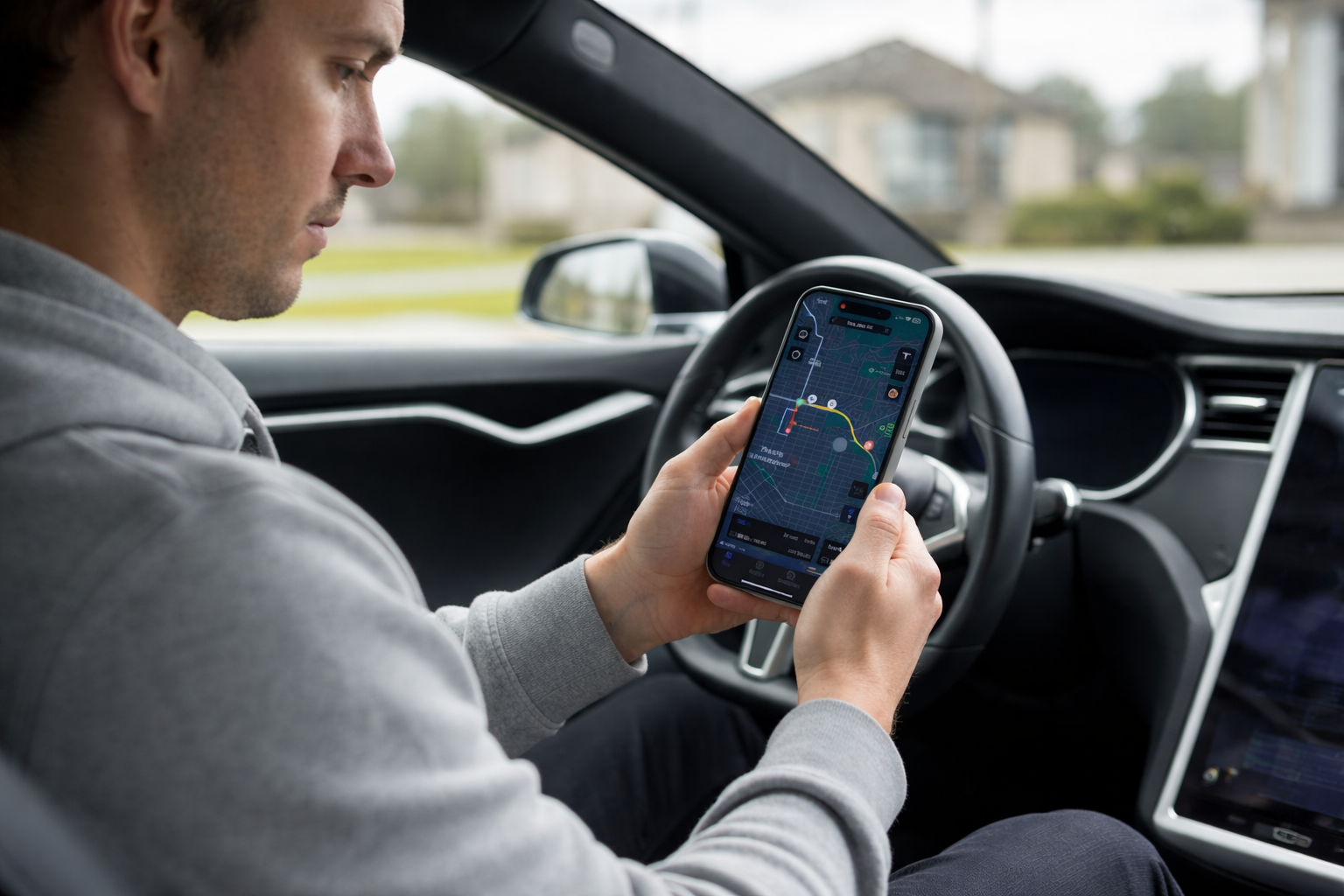
Tesla has been quietly improving what your car does with the footage it records. Two recent updates stand out: your dashcam now holds on to footage for longer before overwriting it, and in update 2026.20 your clips are encrypted by default and tied to your Tesla account. Both are good moves, and if you drive a Tesla you should know they exist.
They also share a common thread. The footage stays in the car, viewable through Tesla's own tools, and locked to your account. That is fine for privacy. It is also exactly where K3Y picks up, because there is a lot more you can do with what your car sees.
Your footage should be yours, and it should last
Tesla keeps your clips on a drive in the car. If that drive fails, gets full, or the car is gone, so is the record. K3Y keeps high-resolution original footage and backs it up to the cloud, on terms you control. The moment you care about is still there a week or a month later, not riding on a single USB stick.
No subscription standing between you and your car
Getting to your footage and your car's activity through K3Y does not depend on paying for a separate connectivity plan. You get remote access to what your car captured without another recurring add-on layered on top.
Your drives become data, not just video
This is where K3Y really pulls ahead. It tracks your Full Self-Driving usage accurately, so you can see where you drove, how far, and how your engagements actually went over time. Tesla shows you clips. K3Y turns those drives into something you can look back on and learn from.
And it organizes itself. K3Y automatically tags events as they happen, so instead of scrubbing through hours of footage, the clip you want is easy to find. Longer recording is only useful if something is making sense of it for you.
Footage you can actually share
A great drive, a clean sentry capture, an interesting moment on the road. With K3Y, those are simple to share, and you can connect with a community of other owners doing the same. Compare that to a file sitting behind an account-bound key that only opens inside Tesla's own viewer.
A different approach to the same goal
Tesla's encryption keeps your clips bound to your Tesla account. To view them off the car, Tesla added a web tool at dashcam.tesla.com: you plug the drive into a computer, sign in, and the clips decrypt locally. It works, and it is a thoughtful touch. It is also just a viewer. The footage still lives only on that one drive, nothing is backed up, and there is no analytics, tagging, or simple way to share on top of it.
K3Y takes a different path. It reads your footage directly and puts it to work, so you run it with dashcam encryption turned off. The instinct is the same, your footage should be yours and protected, but the result is different. You get a copy that lives in a cloud you control, that you can reach from anywhere, search, and share, with your drives turned into data you can actually use.
One more thing
K3Y is not all serious. Once it is plugged in, it also opens up a growing set of personalization features we call Toybox. It starts with two: LockChime, which swaps your Tesla's default lock sound for anything you like, and LightShow. Small touches that make the car feel like yours, and we are just getting started.
See how to set up your custom lock sound →
The short version
None of this is a knock on Tesla. The longer recording is a real upgrade, and encryption is a smart default. K3Y answers the questions those tools leave open: where does my footage live if the drive is gone, how do I see my driving as data, how do I find the clip that matters, and how do I share it without handing over my whole account.
Tesla keeps your footage in the car. K3Y makes it durable, searchable, shareable, and truly yours.

Share:
OASISS, Micro-Parameters, and the Real Work of Safer Autonomy
Tesla Toybox: Every Feature You Can Unlock with K3Y